New project seeks locals to share memories of marine mammals around Shetland
UHI Shetland are delighted to launch a new project ‘Marine Mammal Memories’, which aims to collate marine mammal memories of the past (between 1930s and 2000s), to help better understand the changing distributions, abundance and type of whales, dolphins and porpoise that were once seen around Shetland.
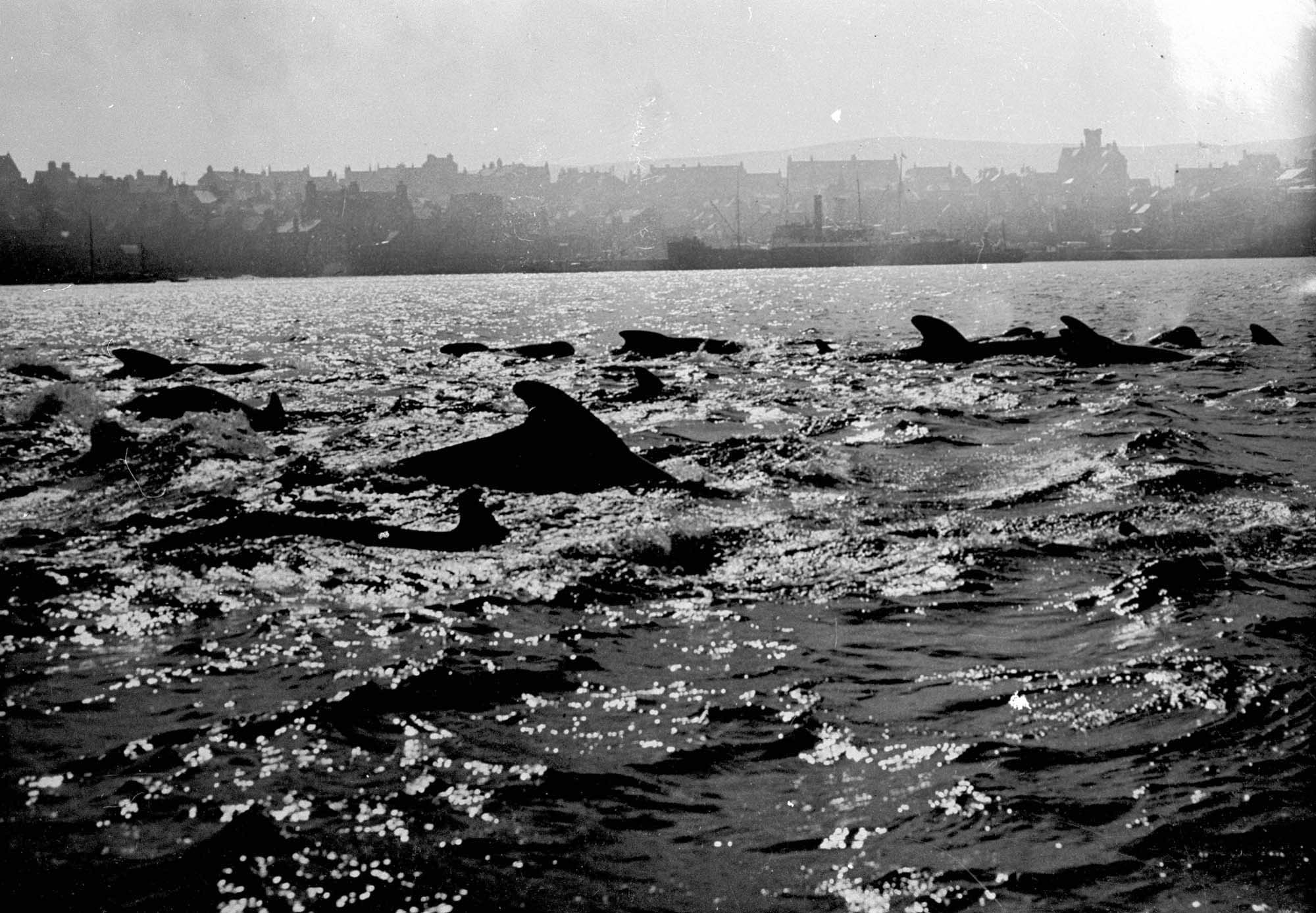
This information and anecdotes collected will be compared to present day sightings, to help understand any changes that have been seen in our local waters. To do this, the research team are inviting anyone with memories to share to take part; either by sharing stories in person or by completing an online survey form. Dr Emily Hague, Marine Mammal Scientist at UHI Shetland said:
“Through building a better understanding Shetland’s past, we will gain context to the marine life we see around Shetland today. Were there always killer whales and humpback whales around? Have neesiks changed the bays where they gather in large groups? Are there any Shaetlan terms for these species that are no longer used? These are all questions we hope this project might shed some light on. We would be keen to hear from anyone that has a memory to share, all information big or small will contribute to our wider understanding. Whether it be that you remember commonly spotting certain species whilst walking your dog or hauling your creels, or that you remember a stranding or unusual sighting, we’d love to hear from you.”
The project team are now conducting interviews, and the online survey is live. They encourage anyone interested in participating to get in touch either by email marineplan.shetland@uhi.ac.uk to via the project website.
This project is being supported by funding from the Scottish Marine Environmental Enhancement Fund using funds made available by the Scottish Government's Nature Restoration Fund, the Shetland Community Benefit Fund and Viking Community Fund (from Viking Energy), and the EU Horizon Ocean Mission funded BLUE CONNECT project.