Record numbers of flapper skate found in latest Fair Isle inshore fish survey
UHI Shetland, in partnership with the Fair Isle Demonstration and Research Marine Protected Area (DR MPA) Executive Steering Group, have released a report which describes the results of the fourth consecutive inshore fish survey, completed around Fair Isle during August 2025. Together with a dedicated sandeel survey carried out in May 2025, it represented the most ambitious fisheries survey programme undertaken around the island so far.

Using a multi-method approach UHI Shetland carried out 10 scientific trawls and four Baited Remote Underwater Video (BRUV) deployments in waters around Fair Isle aboard the 14 m MFV Kestrel (LK 268).
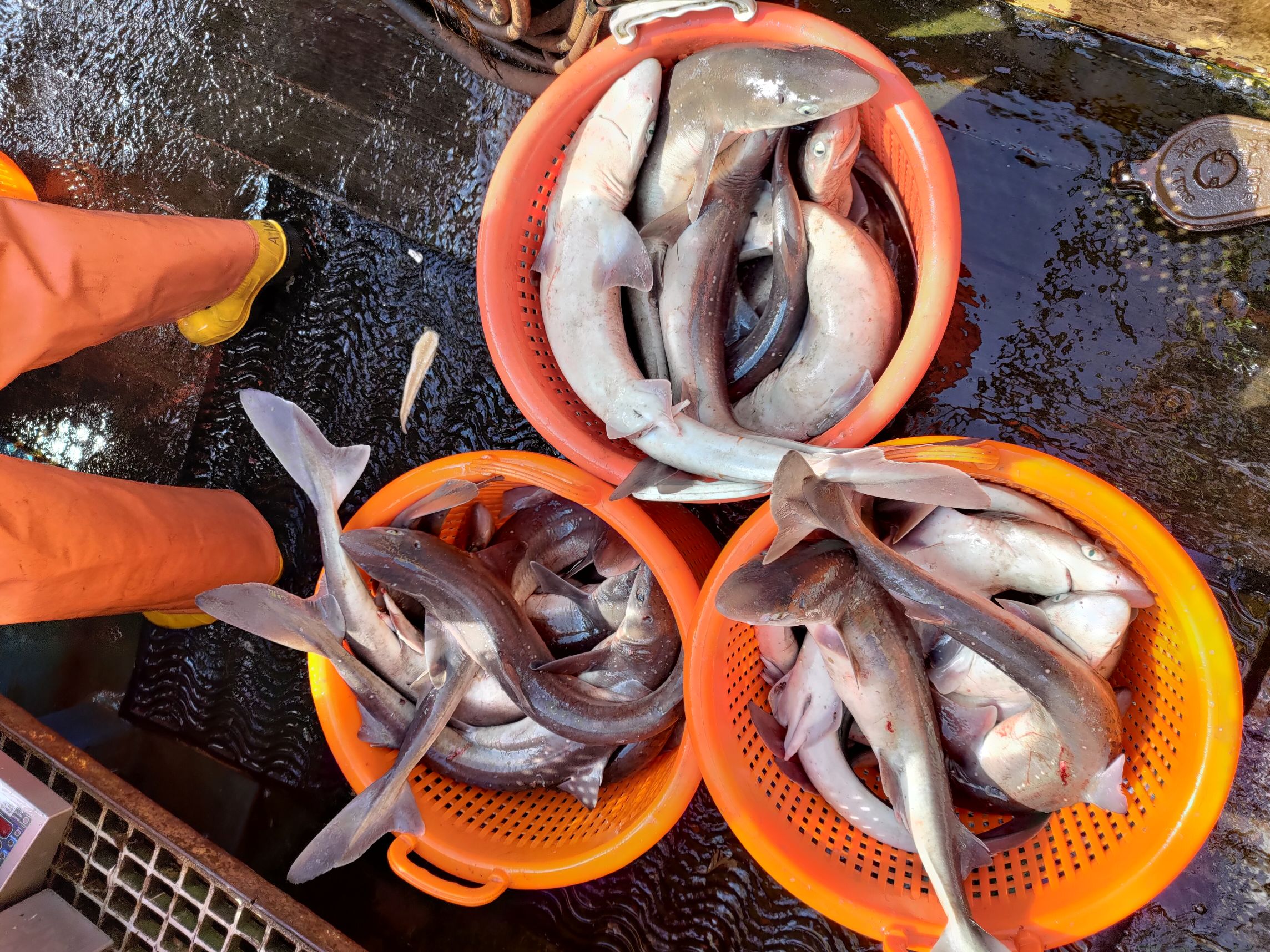
Catch results showed spurdog (Squalus acanthias) to be by far the most dominant species by catch weight in the 2025 survey, accounting for 801 kg — around 27% of the total catch. Spurdog were observed in eight out of ten survey hauls with 97% of the spurdog recorded being male. Over the survey time series (2022-2025) spurdog numbers in Fair Isle are consistently higher compared to corresponding data from the Shetland inshore fish surveys, however, are variable from year to year.
One of the most striking findings was the number of flapper skate (Dipturus intermedius) recorded during the survey. Seventeen flapper skate were caught during the survey — the highest number recorded in the Fair Isle survey time series. The largest flapper skate recorded was a 2.04-metre male weighing 62.05 kg. Every skate was photographed, tagged and returned carefully to the sea to support future research into their growth, movements and distribution. Flapper skate were also frequently observed in BRUV footage across mixed sediment habitats. The researchers say these findings provide further evidence supporting Fair Isle’s recent designation as an Important Shark and Ray Area for undefined aggregations of flapper skate.
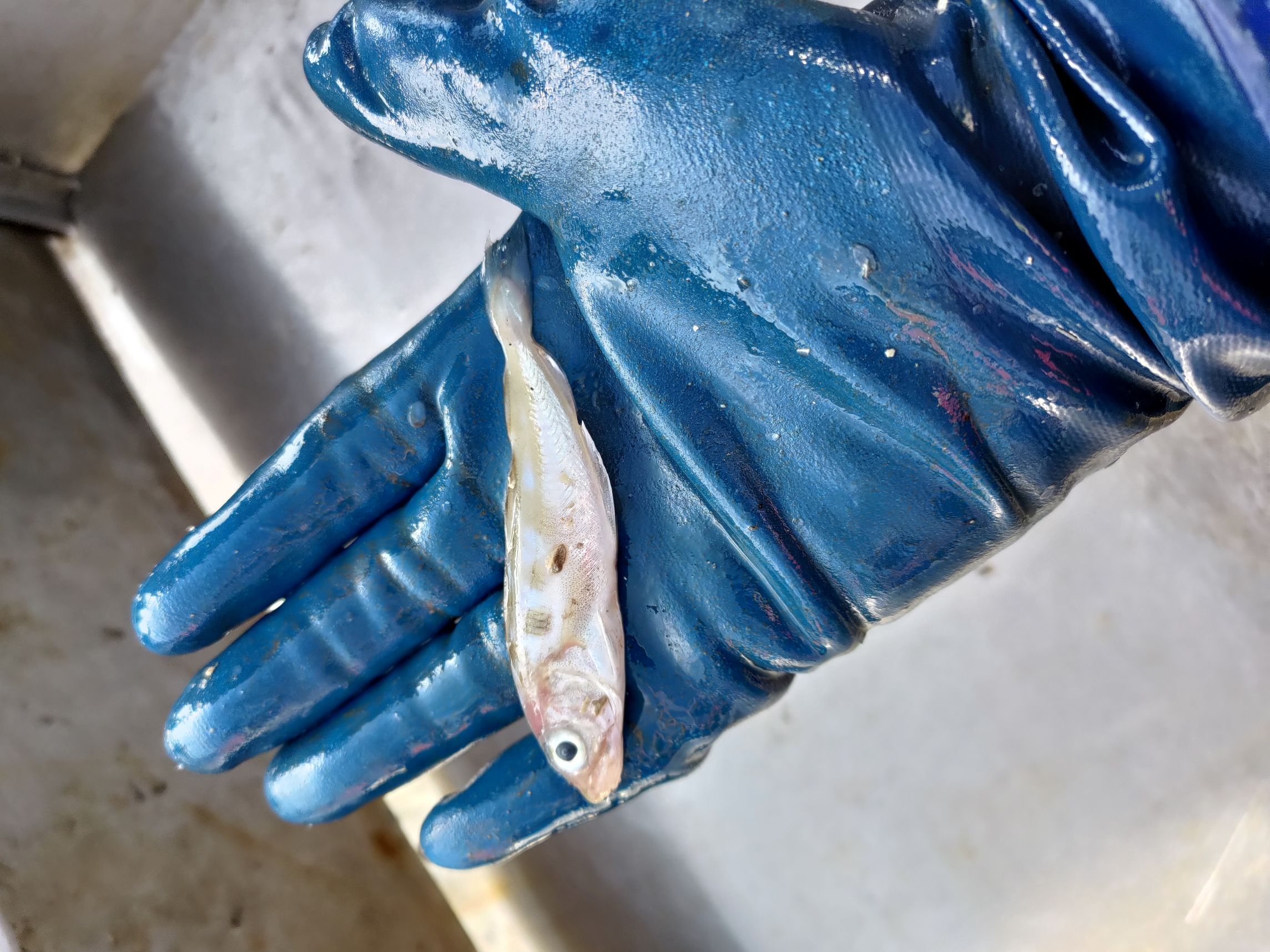
The survey also recorded a range of commercial and other fish species, including haddock, cod, saithe, lemon sole, and plaice. Haddock and other commercial gadoids were predominantly represented by relatively large adult fish, with the survey providing evidence of the growth and survival of a strong haddock year class through the existing Fair Isle time series. Two species — scaldfish and boarfish — were recorded around Fair Isle for the first time in the survey time series.
The results also demonstrate considerable year-to-year variation. Compared with previous surveys, 2025 saw particularly high flapper skate catch rates, while lemon sole, plaice and common dab were also at their highest recorded Fair Isle levels. Haddock and whiting catches were lower than in 2024, while cod catches were slightly higher.
Researchers analysed 121 stomachs from cod, haddock, saithe, spotted ray and spurdog, identifying 36 different prey species across 12 taxonomic groups. Overall, decapods such as crabs and shrimps were the most important prey group, followed by bony fish and echinoderms. The results also highlighted the importance of Norway pout in the diets of several predators, while haddock showed a particularly broad and varied diet.
The report emphasises that the results should be viewed as part of a growing multi-year dataset rather than as a single-year assessment of fish stocks.
The Fair Isle DR MPA was established in 2016 as Scotland’s first community-led Demonstration and Research MPA, with research into local fisheries forming an important part of its objectives. The continuing surveys are intended to improve understanding of local fish populations and provide evidence to support future management and sustainable fisheries.
Dr Shaun Fraser, Senior Scientist and Fisheries Lead at UHI Shetland, said:
“Systematic survey efforts, such as this, are critical for understanding the marine environment. These most recent data from the Fair Isle inshore fish survey provides numerous insights into the abundance, distribution, growth, and diet of fish populations in the area, which have important implications for other marine species and the wider environment.”
Katie Cubbon, Research Officer for the Fair Isle DR MPA commented:
“This survey report provides further evidence of the importance of the Fair Isle marine environment for inshore fish populations, particularly for elasmobranchs such as spurdog and flapper skate. We hope to be able to continue the Fair Isle inshore fish survey in future years, alongside further dedicated research on local sandeel and flapper skate populations. Continued monitoring will help build the long-term time series needed to understand population changes and strengthen the scientific basis for sustainable management of the DR MPA.”
This project is supported by funds raised by players of Postcode Lottery through the National Trust for Scotland's Love Our Nature project. Postcode Lottery players have now raised over £4.3m since 2014 to support the Trust’s vital nature conservation work. The funds are awarded through Postcode Earth Trust.